
Filer vs Non-Filer in Pakistan: Complete Tax Difference Explained
Every FBR-regulated transaction taxes filers and non-filers differently. Here’s exactly how much more a non-filer pays — and how to become a filer. Last reviewed: October 2026.

In Pakistan, being an Active Taxpayer (filer) versus a non-filer makes a real difference to your wallet — not through different income tax slabs, but through much higher withholding tax rates on property, vehicles, banking, and other transactions. This guide compares every major category so you know exactly what non-filer status costs you.
What is the difference between a filer and a non-filer in Pakistan?
Quick answer: A filer is on FBR’s Active Taxpayer List because their latest income tax return was filed and processed; a non-filer is not on the list. The difference is not your income tax slab but the withholding tax on transactions. For example, property purchase is taxed at 1.25% for filers against 10.5% to 18.5% for non-filers, property sale at 2.75% against 11.5%, and cash withdrawals above Rs. 50,000 a day carry 0.8% tax for non-filers only. You must file every year to stay on the list.
What Does “Filer” Actually Mean?
A “filer” is a person whose name appears on FBR’s Active Taxpayer List (ATL) — meaning they filed their income tax return for the most recent tax year and it was processed. Filing a return once doesn’t make you a permanent filer; you must file every year to stay on the ATL. A “non-filer” is anyone not on this list, whether they’ve never filed or missed a recent year.
Filer vs Non-Filer Tax Rate Comparison
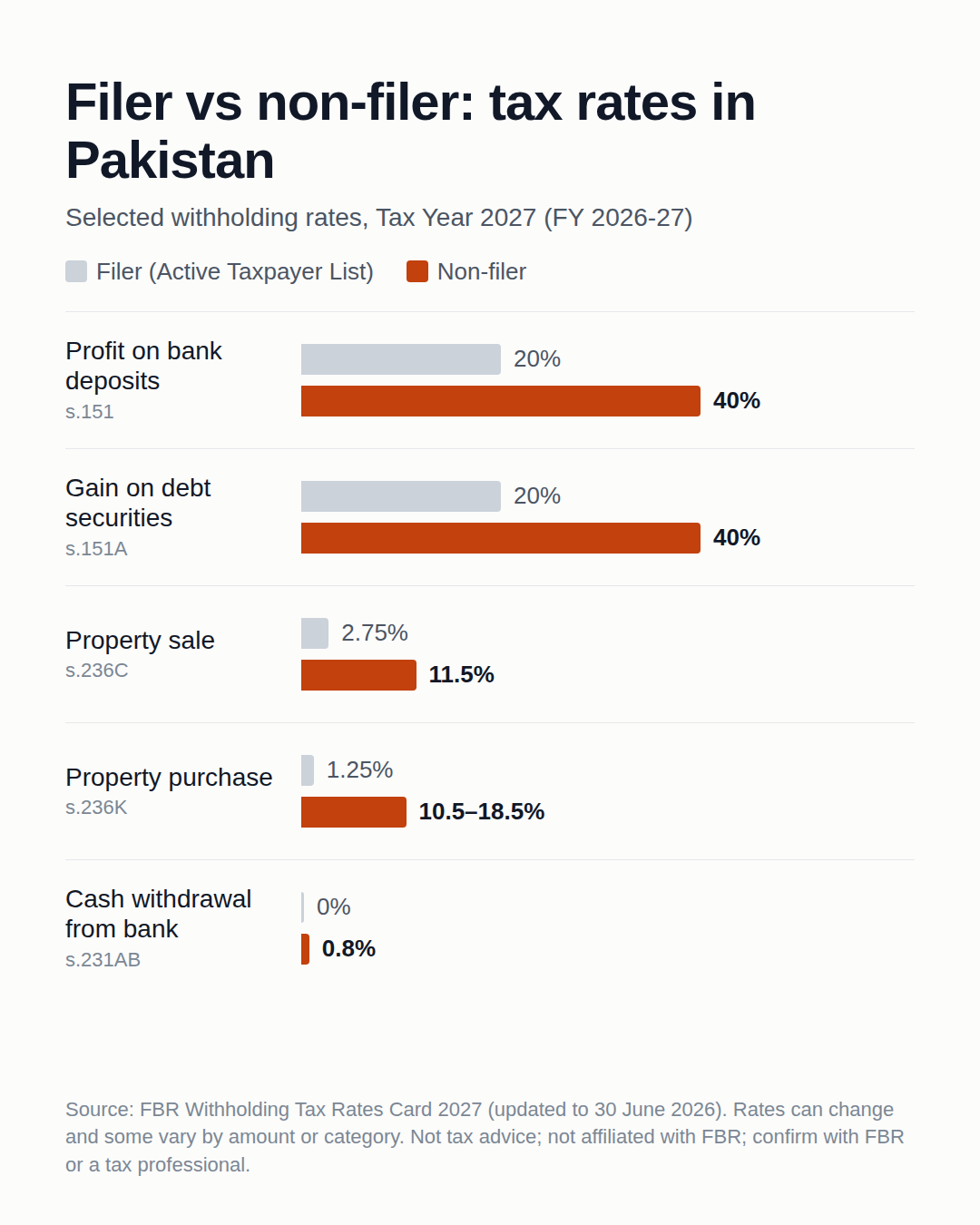
| Transaction | Filer Rate | Non-Filer Rate |
|---|---|---|
| Property purchase (Section 236K) | 1.25% | 10.5% – 18.5% (varies by property value) |
| Property sale (Section 236C) | 2.75% | 11.5% |
| Vehicle registration (Section 231B) | 0.5% – 12% (by engine capacity) | 1.5% – 36% (by engine capacity, 3x filer rate) |
| Cash withdrawal from bank (Section 231AB) | 0% (exempt) | 0.8% |
| Profit on bank deposits (Section 151) | 20% | 40% |
| Gain on debt securities (Section 151A) | 20% | 40% |
| Other profit on debt (Section 151) | 15% | 30% |
Source: FBR Withholding Tax Rates Card, Tax Year 2027 (updated to 30 June 2026). Some rates vary by amount, category or payer type, and rates can change with each Finance Act, so confirm with FBR or a tax professional before relying on them.
Try our Property Purchase Tax Calculator or Vehicle Tax Calculator to see the filer vs non-filer difference on your own numbers.
Why Filer Status Matters Beyond Tax Rates
- Property registration: Non-filers face restrictions on purchasing property above certain values in some cases.
- Vehicle purchase: Non-filers historically faced outright bans on new vehicle purchases above certain engine capacities (policy varies by Finance Act).
- Visa & loan applications: Many banks and embassies request tax return copies as proof of income and compliance.
- Business credibility: Being a filer is often required to bid on government contracts or open certain business accounts.
How to Become a Filer
Becoming a filer takes three steps: get an NTN (National Tax Number), register on FBR’s IRIS portal, and file your annual income tax return. See our full walkthrough in How to Become a Tax Filer in Pakistan (Step-by-Step).
Not sure if you are even required to file? See the full breakdown in Filer & Non-Filer Eligibility Criteria in Pakistan.
Frequently Asked Questions
Is salary tax different for filers and non-filers?
No. Income tax slabs on salary are identical regardless of filer status. The difference shows up on property, vehicle, banking, and dividend transactions, not on salary withholding itself.
How do I check if I’m on the Active Taxpayer List?
You can check your ATL status on FBR’s official website by entering your CNIC number, or by sending your CNIC via SMS to FBR’s ATL verification service.
How long does it take to become an active filer after registering?
Once you file your return through IRIS, your name typically appears on the ATL within a few days to a few weeks, depending on FBR processing times. The ATL is updated periodically throughout the year.
Does overseas Pakistani status change filer requirements?
Non-resident Pakistanis (NRPs) have a separate category under tax law with different treatment on Pakistan-source income. NRPs should confirm their specific obligations with FBR or a tax consultant.
Related resources
Explore the full Pakistan Income Tax Guide, check FBR Tax Slabs 2026-27, or browse all Pakistan Tax FAQs.
Related tools: Cash Withdrawal Tax Calculator and Property Sale Tax Calculator.
More free Pakistan tax tools and guides
- FBR tax slabs 2026-27
- Vehicle tax calculator
- Filer and non-filer eligibility criteria
- Check electricity bill online
- Electricity bill taxes by DISCO
- PTA tax calculator
- Vehicle token tax calculator
- Multi-year salary tax calculator
- Salary increment calculator
- Property purchase tax calculator
- Rental income tax calculator
- Insurance tax calculator
- Zakat calculator
- Pakistan tax FAQs
- About QuickTax PK
- Contact us
- Privacy policy
- Disclaimer
Filer or non-filer: common questions
How do I know if I am a filer or non-filer?
Check your CNIC on the FBR Active Taxpayers List. Our ATL status check guide shows how. If your name is on the list for the current year, you are treated as a filer.
What does it mean to be a non-filer in Pakistan?
A non-filer is not on the Active Taxpayers List. Non-filers pay higher withholding tax on bank cash withdrawals, property, vehicles and some other transactions.
Who should file a return in Pakistan?
Anyone whose income is above the taxable limit must file, and the FBR also expects some people to file because of what they own or spend, such as property or vehicles. Rules vary, so read our guide to becoming a filer or ask a tax consultant.